
In high-stakes startup culture, having a bold vision is only half the battle. For founders building a software-driven product, bringing that vision to life with investor-ready technology is the big differentiator between success and getting “stuck” in the early stages. Yet many non-technical founders face a paradox: leading a tech-driven venture without writing a single line of code. That’s where minimum viable product (MVP) development for startups comes in, helping non-technical founders validate ideas, manage risk and build confidence with investors.
Key takeaways we’ll explore in this blog:
- MVP development for startups doesn’t require coding knowledge. Non-technical founders can succeed with the right governance and process.
- Pre-development diligence (validation, specs, prototypes) reduces risk and prevents wasted budget.
- Choosing the right resourcing model (co-founder, freelancers or agency) sets the tone for cost, control and investor perception.
- Fractional CTOs and independent code audits strengthen investor confidence without giving up equity.
- AI tools accelerate MVP software development and help bridge the gap between business and engineering.
Successful MVP development for startups is possible, with or without technical software skills.
The Non-Technical Founder’s Paradox: From Big Vision to Investable Business
The startup world is filled with visionary leaders whose expertise is in business, not code. This creates a fundamental paradox: you must guide a technology company without a deep understanding of the technology itself. This gap between vision and execution is a major risk, and investors are keenly aware of it. Your ability to govern the technical process is a key factor in securing funding.
This challenge often begins with the founder’s greatest asset: their vision. The ambition for a flawless, fully featured product clashes with the lean, iterative nature of MVP software development. This “visionary’s curse” leads to common stumbling blocks: feature bloat, budget overruns and a confusing initial product. Compounding this are the hurdles of a technical knowledge gap: fear of making technical decisions, difficulty scoping the MVP, communication breakdowns with engineers and flawed vendor selection based on cost instead of expertise.
For an investor, these are red flags. They aren’t just funding an idea; they are backing a team’s ability to execute. A founder who can’t articulate their technology plan or demonstrate control over development is a high-risk proposition. The solution isn’t to learn to code, but to establish a robust framework for technical governance.
The Blueprint: De-Risking Before You Build
The most impactful risk reduction happens before a single line of code is written. MVP software development failures rarely stem from bad code; they stem from building the wrong product. Your most valuable “development” work is the pre-development diligence that mitigates this risk.
- Rigorous Validation: The biggest mistake is building a solution based on unproven assumptions. Before anything else, become an expert on your customer’s problem through extensive primary research (e.g., 100 user interviews). This isn’t about pitching; it’s about listening. Use this research to create detailed user personas and map the customer journey to ensure every decision is user-centric.
- Clear Specifications: Translate your validated idea into a detailed Product Specification Document (PSD). This document is your “source of truth,” aligning the founder, stakeholders and developers. For external teams, it acts as a contract that defines the project’s scope, preventing the scope creep that drains budgets. It should include SMART goals, user stories and ruthless feature prioritization using a framework like MoSCoW (Must-have, Should-have, Could-have, Won’t-have).
- Visual Prototypes: Turn abstract specifications into concrete, tangible wireframes and clickable prototypes using tools like Figma. These visual guides close the interpretation gap, allow for early user feedback and provide developers with a perfectly clear blueprint of what to build.
This early diligence is the foundation of successful MVP development, helping founders avoid costly missteps and build with confidence.
The Build: Assembling Your Team and Tech Stack
With a validated blueprint, you must choose how to execute the MVP software development. There are three primary models for assembling a technical team, each with a different blend of cost, control and commitment.
- Technical Co-founder: Offers perfect alignment and deep commitment, but finding the right person is difficult, and it comes at a high cost in equity.
- Freelancers: A flexible and cash-efficient model, but it requires significant management and oversight from the founder to ensure quality and cohesion.
- Development Agency: Provides immediate access to an experienced, coordinated team and handles project management, but it is typically the most expensive option in terms of upfront cash.
Simultaneously, as you integrate powerful tools like Large Language Models (LLMs) (e.g., ChatGPT, Google Gemini, Claude), securely managing them is critical. Using a platform like Azure API Management creates a secure gateway that centralizes control, prevents budget overruns and simplifies the developer workflow. However, architecting this level of enterprise-grade infrastructure is a significant challenge. A technology partner like Withum can help design and implement a secure, scalable AI gateway, freeing your team to concentrate on innovation.
The Governance: What “Investor-Ready” Really Means
“Investor-ready” doesn’t mean your product is flawless. It means that technology is not a liability. It signifies a solid foundation built for growth, not “spaghetti code” that will need a complete rewrite. To prove this, a non-technical founder must implement a system of checks and balances.
The modern approach is to unbundle the role of the traditional CTO. Instead of giving away significant equity for oversight, you can hire technical supervision as a service.
- The Fractional CTO: Hire a part-time, experienced technology executive to provide strategic guidance, vet your development team, review code quality and represent your technology credibly to investors, all without the cost of a full-time salary.
- The Independent Code Audit: Before a fundraiser, commission a third-party code audit. This is the technical equivalent of a financial audit, providing an unbiased assessment of your codebase’s quality, security and scalability. A positive report from a respected firm is a powerful asset that builds trust and proactively addresses investor concerns about technical risk.
AI Solutions That Deliver Results
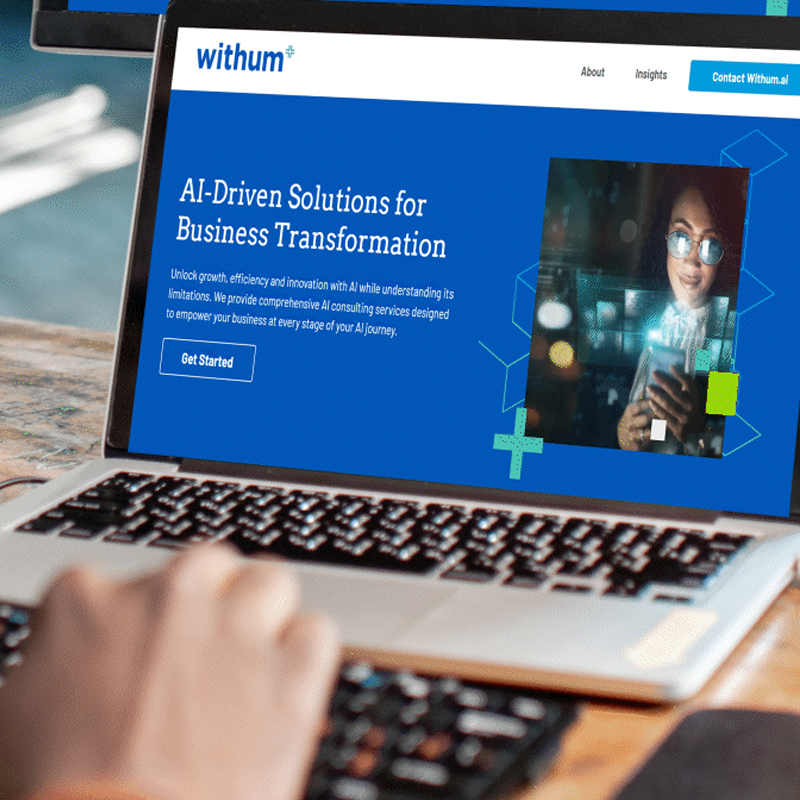
Explore withum.ai, your resource for AI implementation and production-ready solutions. Find expert insights and practical guidance to move your business from ideas to impact.
The AI Advantage: Smarter MVP Development for Startups
AI tools are transforming the development process itself, helping to accelerate coding, write test cases and even serve as a “translator” to bridge the communication gap between business and engineering.
A forward-thinking architecture will also ensure AI Independence, treating the AI component as a modular, interchangeable part to avoid vendor lock-in and future-proof the product. Platforms like Microsoft Azure provide the tools, but realizing this potential requires specialized talent to bridge the gap and provide strategy and implementation of these sophisticated, data-driven AI applications.
Key Insights: From Risky Bet to Strategic Investment
For a non-technical founder, the path to an investable company is not a game of luck; it’s a process that can be managed. Success is not contingent on learning to code, but on establishing strategic technical governance. This playbook is built on four pillars:
- Plan First: The most effective risk reduction is thorough pre-development diligence.
- Build Smart: Choose a resourcing model and tech stack that strategically fits your budget and management capacity.
- Govern Actively: Implement a system of checks and balances with fractional experts and objective audits.
- Innovate with AI: Use AI as a strategic tool to enhance your product and process.
By embracing this role and following a disciplined playbook, and with the guidance of an experienced technology partner, MVP development for startups can become a structured, strategic process that transforms a speculative venture into a de-risked, scalable and highly appealing investment.
Author: Abhishek Choudhary | [email protected]
Contact Us
Withum won’t just tell you, we’ll show you what’s possible to accelerate lean, successful MVP development. Contact our AI Services Team today to see what’s possible.