


The E-Suite Interviews
The E-Suite Interviews is a podcast mini-series spotlighting the builders redefining modern e-commerce.
For today’s e-commerce companies, the customer journey rarely starts with a search. More often, it begins with a scroll.
Social media has evolved from a marketing channel into a measurable driver of e-commerce sales, influencing how customers discover products, build trust, and make purchasing decisions. For Withum’s e-commerce clients, this shift creates real growth potential while also introducing new strategic and operational challenges as businesses scale.
The impact of social media on e-commerce performance is no longer anecdotal. In the United States, social commerce sales are expected to exceed $90 billion annually, with projections reaching approximately $150 billion by 2029.
Today, social commerce represents roughly 6%–7% of total U.S. e-commerce sales, a share that continues to grow each year as platforms embed shopping more directly into content feeds.
Consumer behavior supports this trend. More than half of U.S. digital consumers have made purchases influenced by social media, and roughly 30% report buying a product after seeing it promoted by a creator or influencer.
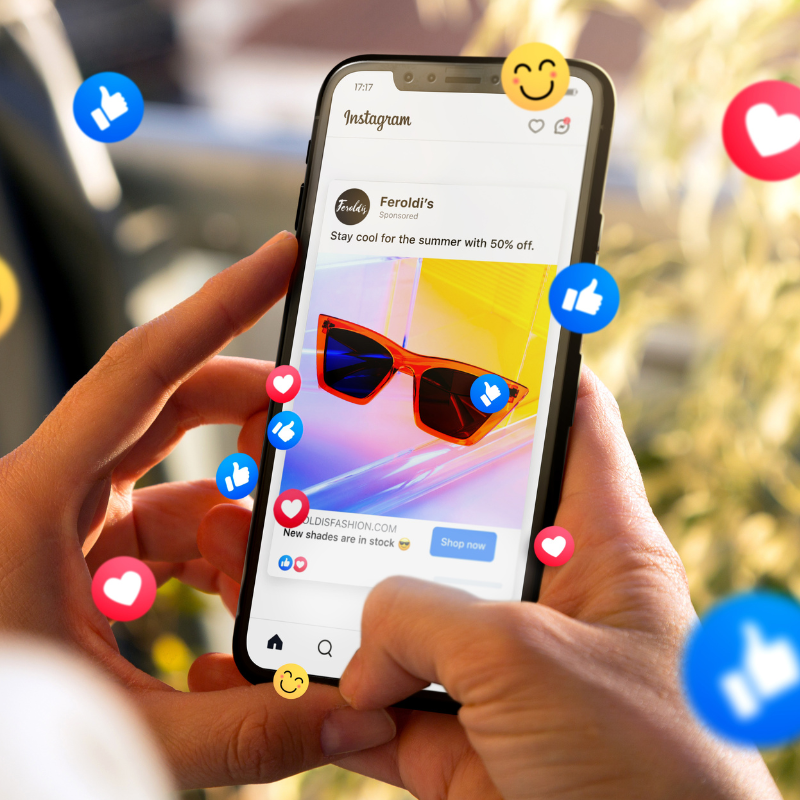
Growth at the platform level further illustrates social media’s expanding role in driving revenue. TikTok Shop, one of the fastest-growing social commerce platforms, reported U.S. sales growth exceeding 100% year over year, capturing a rapidly increasing share of total social commerce activity.
Globally, social commerce sales reached $1 trillion in 2024, growing by more than 12% year over year and outpacing the growth of traditional e-commerce channels.
While social commerce is expanding broadly, a handful of platforms are defining how in-feed shopping actually works in practice. Each operates differently, and understanding their distinct mechanics helps e-commerce businesses make more informed channel decisions.
TikTok Shop embeds the entire purchase flow, from discovery through checkout, directly within the TikTok app. Sellers can tag products in short-form videos and livestreams, enabling viewers to buy without leaving the platform. Its algorithm-driven content distribution gives newer brands genuine organic reach – a real advantage for businesses trying to grow without depending entirely on paid advertising. The platform’s rapid growth in the U.S. market has made it one of the most closely watched channels in social commerce.
Meta operates two distinct but connected shopping surfaces for e-commerce businesses. Facebook Shops provides a branded storefront accessible from a business’s Facebook Page, giving sellers a persistent destination rather than relying solely on content discovery. Instagram Shop layers shoppable product tags into posts, Reels, and Stories, turning the visual feed into a direct sales channel. The two are managed through the same Commerce Manager backend, so brands running both can keep catalog, pricing, and inventory in sync without duplicating work. Instagram tends to perform best in visually driven categories like apparel, beauty, and home goods, where the feed itself does the merchandising. Facebook’s older, broader user base extends that reach to less-active Instagram segments. Together, they give e-commerce businesses meaningful coverage across Meta’s advertising infrastructure without requiring a fundamentally different strategy for each platform.
Amazon Live brings live-streaming commerce to Amazon’s existing marketplace infrastructure. Brands and creators host real-time product demonstrations that link directly to Amazon listings, combining the engagement of live video with Amazon’s trusted checkout and fulfillment network. For sellers already active on Amazon, Live represents an opportunity to increase visibility and conversion rates without requiring customers to transact on an unfamiliar platform. It performs best in categories where showing the product in use does the selling: electronics, fitness equipment, and beauty.
WeChat’s social commerce model is the most integrated of any platform globally. Through Mini Programs, which are lightweight apps that run natively inside WeChat, brands can operate full storefronts, process payments, manage loyalty programs, and communicate with customers, all without directing users to an external website. While WeChat’s primary user base is in China, it remains a critical channel for e-commerce businesses with significant Chinese consumer markets or international expansion ambitions. Its model has also served as an influential reference point as Western platforms have developed their own embedded shopping features.
Whatnot is a livestream auction platform that has gained traction in collectibles, trading cards, vintage apparel, and other enthusiast categories. Its community-driven format drives high engagement and repeat purchases among niche audiences. For the right product categories, Whatnot offers a differentiated channel with less competition than larger platforms and a buyer base that shows up with purchase intent, not just curiosity. Its growth signals broader consumer appetite for interactive, entertainment-forward commerce experiences.
While social media opens new paths to customers and faster conversions, it also introduces complexity for growing e-commerce companies.
Competition for attention is intense, content lifecycles are short, and platform algorithms evolve quickly. Brands must invest continuously in creative production while balancing paid advertising, influencer partnerships, and community management.
At the same time, selling across multiple platforms can strain internal alignment if teams, data, and technology are not designed to support multi-channel growth.
In crowded social feeds, trust remains a critical differentiator. Customers rely heavily on reviews, creator recommendations, and user-generated content to validate purchasing decisions.
Maintaining authenticity at scale, however, is genuinely hard. Successful e-commerce brands actively manage brand voice, monitor customer sentiment, and engage in real time to preserve credibility as visibility increases.
As social media becomes more tightly integrated into the buying journey, e-commerce leaders must look beyond individual campaigns. Social channels should be evaluated as part of a broader growth strategy – one that aligns marketing, operations, and infrastructure with changing customer behavior.
The businesses best positioned for long-term success are those that use social media deliberately and build the operational foundation to support it.
Social media is no longer just influencing e-commerce – it is helping drive revenue growth.
For Withum’s e-commerce clients, the opportunity lies in capitalizing on social-driven demand while understanding the challenges that accompany it. The feed is where attention starts. Sustainable growth requires the infrastructure and discipline to convert that attention into lasting revenue.

For more information on this topic, please reach out a member of our E-Commerce Services Team.
The E-Suite Interviews is a podcast mini-series spotlighting the builders redefining modern e-commerce.

E-commerce M&A has matured. Buyers still care about growth and brand, but they now spend just as much time on how the business operates day to day, particularly its financial reporting and tax. If a sale is something you may consider down the road, knowing what buyers focus on can help you feel more prepared…

Selecting the optimal state for your e-commerce warehouse or third-party logistics (3PL) facility involves more than just proximity to customers or major transportation hubs. While shipping speed and costs are critical to this decision, state taxes should also be considered, as they can vary widely across states and turn out to be either beneficial or…