Articles 2 min read

Cyber Matters: Edition 2

Cutting through the noise to highlight the cybersecurity developments most likely to affect your organization: the threats worth acting on and the incidents worth learning from.

This period had one defining pattern. Attackers came in through access someone else had already approved: a vendor’s login to a national register, an employee’s cloud credentials, a customer portal, and the consoles that manage whole networks. One ransomware attack on a cloud provider then showed what happens when hundreds of organizations share the same infrastructure. Each item below is written for executive leadership and paired with prioritized actions you can take now.

What Actually Matters This Cycle

Executive Snapshot

This cycle in one line: Attackers didn’t break in this cycle. They used access someone had already approved. One ransomware attack on a cloud provider then left hundreds of organizations rebuilding at once.

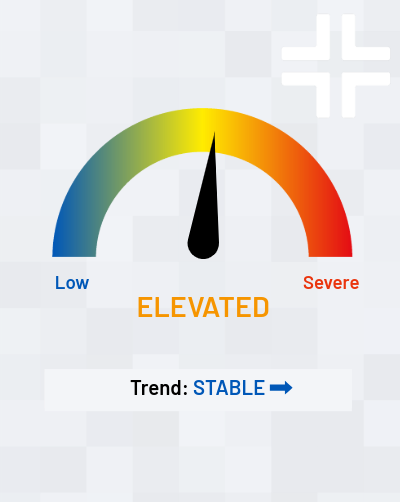
Overall risk this cycle: ELEVATED

Attackers exploited flaws in the Cisco SD-WAN and Citrix NetScaler consoles that run whole networks; four fresh incidents came in through vendor, employee and customer access; and a single ransomware attack on a cloud region left 495 organizations rebuilding.

Emergent Cyber Threats

New and evolving attack methods to be aware of and steps to reduce your exposure.

On September 30, Cisco patched CVE-2026-76504 (CVSS 9.8), a flaw in Catalyst SD-WAN Manager that attackers were already exploiting. The tool lets administrators run up to 6,000 network devices from one dashboard. Cisco says the flaw lets an unauthenticated attacker reach the management API “as the admin user” by encoding one character of a web request (“%6a” for “j”) to slip past an authentication rule. Every deployment is affected regardless of configuration, and there is no workaround. It is the fifth exploited SD-WAN zero-day this year. As watchTowr’s Jake Knott put it, a “single-pane-of-glass” for the whole network “is naturally an attractive target.”

WHAT TO DO
  • Upgrade every Catalyst SD-WAN Manager, including cluster and disaster-recovery nodes, to a fixed release now.
  • Collect diagnostic (admin-tech) files before upgrading, so evidence of compromise survives.
  • Search the service-proxy and vManage server logs for “j_security_check” requests from unknown addresses and open a Cisco TAC case if you find any.
  • Remove internet exposure of SD-WAN management interfaces wherever the business allows.
  • Treat any confirmed compromise as a network-wide incident, because the console controls every connected device.

Source: BleepingComputer (Sergiu Gatlan), September 30, 2026; SecurityWeek (Ionut Arghire), October 1, 2026

On October 4, CISA added CVE-2026-88779, a memory overflow in NetScaler ADC and Gateway, to its Known Exploited Vulnerabilities (KEV) catalog. Citrix says attackers are using it to crash unpatched appliances, and repeated attacks can keep the service down. The warning came days after organizations patched two NetScaler zero-days (CVE-2026-88771 and CVE-2026-88772). Administrators then reported appliances crashing and rebooting. According to Help Net Security, attackers appear to be trying to download a script and install web shells, and researcher Kevin Beaumont found a malware binary on one of his honeypots. Only appliances that use SAML authentication with Gateway or AAA features are exposed. NetScaler often sits in front of remote access, so an outage there can lock out the whole workforce.

WHAT TO DO
  • Upgrade NetScaler ADC and Gateway to 14.1-73.41, 13.1-64.28, or the matching FIPS/NDcPP fixed build.
  • Confirm which appliances use SAML authentication, and patch those first.
  • Until you can upgrade, apply Citrix’s Global Deny List signatures to cut exposure.
  • Look for unexpected reboots, new files, and web shells on NetScaler appliances.
  • Plan a backup remote-access path in case the gateway goes down during an attack.

Source: Help Net Security (Zeljka Zorz), October 5, 2026

On October 8, the FBI and Justice Department seized seven domains behind two hacking tools, MicroScan and FishHub. They say the tools belong to Integrity Technology Group, a Beijing contractor linked to the group known as Flax Typhoon. The same day, CISA, the FBI, the NSA, and partners in six other countries published joint advisory AA26-281A. It describes how the group used scanning, guessed or reused passwords against Microsoft Exchange, and Microsoft’s own mail APIs to steal email from government, healthcare, manufacturing, and IT organizations. The DOJ said scan targets included a South Carolina power company and airports in Japan and Poland. CISA also added five old flaws to the KEV list, some dating back to 2015, including ProFTPD, Apache Struts, and ISC BIND. Most of this works without a new exploit: it relies on weak passwords and old software.

WHAT TO DO
  • Require multifactor authentication on webmail, VPN, and every administrative login.
  • Alert on password-spraying patterns: many failed logins across many accounts from the same sources.
  • Monitor for bulk mailbox access through Exchange Web Services and Microsoft Graph.
  • Patch or retire the older products named in the advisory and replace end-of-life edge devices.
  • Hunt for the advisory’s indicators of compromise in DNS, proxy, and mail logs.

Source: The Hacker News (Ravie Lakshmanan), October 9, 2026; IBTimes Singapore (Dheemanth Kashyap), October 10, 2026

Bitdefender’s October threat debrief, published October 5, recorded 790 claimed ransomware victims in September, a 30% increase over September 2025. On September 30, an international law-enforcement operation called Operation KillSwitch seized the KillSec group’s leak site, which held more than 10 TB of data, along with several of its servers. Bitdefender called the takedown encouraging but warned that hidden backup infrastructure and affiliates may remain. Its advice is blunt: organizations “should not wait for law enforcement” before acting on containment and recovery. Takedowns slow individual groups. They do not change the overall volume of attacks.

WHAT TO DO
  • Test restores from offline or immutable backups, not just backup job completion reports.
  • Keep an incident-response retainer and contact list current, including law-enforcement contacts.
  • Patch internet-facing systems on the KEV list within days, since that is how many ransomware intrusions begin.
  • Harden systems after any recovery so the same group cannot walk back in.

Source: Bitdefender Threat Debrief (Jade Brown), October 5, 2026

Recent Incidents

Real-world breaches and the lessons they carry for organizations like yours.

At 3:40 a.m. on October 7, ransomware hit IDC Frontier, a SoftBank subsidiary, and forced it to shut down the “East Japan Region 1” of its IDCF Cloud service. The company says 495 companies and local governments are affected. It disabled customer access to management consoles in every region while it checks their security. According to SDxCentral, the company later warned that customer data in the affected zones would be difficult to retrieve, and advised customers to “prepare a separate environment and rebuild your system.” The attackers left a message on the console claiming the breach took “seven minutes.” They also claimed to have reached 239 hypervisors and wiped 554,153 snapshots. One shared provider failure became a failure for hundreds of customers at once.

WHAT TO DO:
  • List the systems that depend on a single cloud provider or region, and note which ones the business cannot run without.
  • Keep backups you control outside your primary provider, and test rebuilding from them.
  • Ask critical providers how they isolate tenants and protect snapshots and backups from deletion.
  • Write the “provider is down and data is gone” scenario into your continuity plan.
  • Keep an out-of-band way to reach staff and customers if hosted email or telephony fails.

Source: BleepingComputer (Bill Toulas), October 8, 2026; SDxCentral (Giacomo Lee), October 9, 2026

On October 5, Denmark said unauthorized parties obtained the names, addresses, and CPR (national ID) numbers of about 8.8 million people from its Central Person Register. The count is larger than the population because the register also keeps records of people who have died or moved abroad. Nobody broke into the register. The attackers misused a small Danish company’s lawful access to search it. Officials said the account made more than 14 million lookups over about ten days in September. Officials only noticed when they went to bill the company for the usage. According to Cybernews, the vendor’s administrators reportedly used the password “123456.” A strong central system was undone by a weak link at a small vendor, and there were no usage alerts to catch it.

WHAT TO DO:
  • Inventory every third party with direct access to your sensitive systems, and confirm each one enforces MFA and strong passwords.
  • Set volume and rate limits on vendor accounts and alert in real time when usage spikes.
  • Limit vendor access to the specific records the contract requires, not open search.
  • Review vendor access logs regularly, not just at billing time.
  • Warn staff and customers to expect phishing that uses real ID numbers and addresses.

Source: SecurityWeek (Ionut Arghire), October 6, 2026; The Next Web, October 6, 2026; Cybernews (Paulina Okunytė), October 12, 2026

On October 6, customers of UK fashion retailer ASOS received a push notification through the official app: “ASOS HACKED … we have fully compromised the Snowflake instance. Engage with us, or we will leak it.” ASOS later confirmed that attackers accessed third-party platforms it uses to communicate with customers. It said names and contact information were taken, but not payment cards or passwords. BBC News, cited by TechCrunch, reported that home addresses, phone numbers, and customer profile notes such as search queries were also taken. According to BleepingComputer’s reporting, the attackers got in by impersonating a trusted contact to obtain an employee’s login. Snowflake says its own systems were not breached. Marketing and messaging tools often hold rich customer data and the power to speak in the company’s voice.

WHAT TO DO:
  • Put marketing, customer-data, and push-notification platforms under the same MFA and access reviews as core systems.
  • Require a second approver before any message goes to your whole customer base.
  • Train staff to verify credential requests from “trusted contacts” through a separate channel.
  • Prepare a holding statement and customer guidance in case your own channels are used against you.

Source: BleepingComputer (Lawrence Abrams), October 6, 2026; TechCrunch (Zack Whittaker), October 8, 2026

Southern Company is notifying about 400,000 customers that an unauthorized party accessed their accounts through its online customer portal: about 300,000 at Georgia Power and about 100,000 at Alabama Power. Mississippi Power is also named, but without a figure. The exposed data includes names, mailing addresses, phone numbers, email addresses, the last four digits of Social Security numbers, and basic account details. Bank, card, and driver’s license numbers were not affected. The company has not said how the attacker got in. Its warning to customers is a useful model: it “will never threaten immediate disconnection or demand payment over the phone.”

WHAT TO DO:
  • Protect customer portals against automated login attempts with MFA options, rate limiting, and bot detection.
  • Alert on one session or source reading many accounts in a short time.
  • Tell customers in advance how you will and will not contact them.
  • Expect utility-themed phishing that cites real account details, and brief your staff and help desk.

Source: SecurityWeek (Eduard Kovacs), October 7, 2026; CBS News Atlanta (Dan Raby), October 5, 2026

The Bottom Line

Three themes tie these two weeks together. First, trusted access is the attack path. The Danish register, ASOS, and Southern Company were reached through a vendor login, an employee’s credentials, and a customer portal, not through broken code. Second, the consoles that run your network are now the prize. Cisco SD-WAN and Citrix NetScaler were both exploited, and the Flax Typhoon advisory shows state-backed actors still winning with guessed passwords and old software. Third, concentration risk is real. One ransomware attack on a cloud region left 495 organizations rebuilding, and only their own backups could help.

Three Actions to Take Right Now

1. Patch Cisco Catalyst SD-WAN Manager and Citrix NetScaler now, then check both for signs of compromise.

2. Enforce MFA, usage limits, and real-time alerts on every vendor and partner account that touches sensitive data.

3. Confirm you hold tested backups outside your primary cloud provider for the systems you cannot run without.

Withum plus signs.

Have Questions or Need Guidance?

Want help assessing how these developments could affect your organization? Withum’s Risk Advisory and Assurance Services Team can help identify potential exposure and prioritize next steps.

Contact Us

Related Insights

Read more
Digital padlock with glowing edges on a dynamic abstract background, embodies cybersecurity concept.
Cyber Matters: Edition 1

Reporting window: September 14 – September 28, 2026 (trailing 14 days) What Actually Matters This Cycle Executive Snapshot This cycle in one line: Attackers are going straight at the systems that hold people data, from HR and recruiting platforms to court records and a Pentagon personnel server, and many of the worst exposures trace back…

Read more
business leaders analyzing cybersecurity risk
What Every Business Leader Should Know About Cyber Risk Today

Cyber threats have changed significantly in just a few years. Attackers are increasingly using legitimate credentials rather than trying to break through traditional security controls. Cloud platforms, third-party relationships and expanding digital ecosystems have created more ways to access an organization’s systems and data. Artificial intelligence is making social engineering faster and more convincing. At…

Read more
two cybersecurity professionals reviewing a security dashboard.
Why Managed IT Is a Business Strategy, Not Just a Help Desk

For small and midsize businesses (SMBs), technology has become fundamental to nearly every part of the business, from serving customers and processing payments to managing data and keeping operations running. Yet many businesses still approach IT reactively, addressing issues when something breaks rather than managing technology as critical business infrastructure. Artificial intelligence is making that…