Lynn-Mucenski-Keck_Web

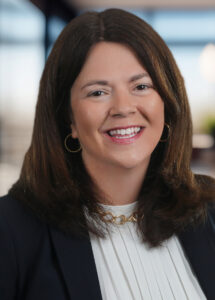
Lynn M. Mucenski-Keck

CPA, MST Partner, Lead, Federal Tax Policy

Get to Know Me

Lynn Mucenski-Keck has over 20 years of experience in the accounting profession and serves as the lead of federal tax policy at Withum. She specializes in federal tax policy, federal clean energy credits and mergers and acquisitions.

Her interactions with Congress and various DC advocacy groups give her real-time insights into potential federal tax legislation, enabling her to help clients implement forward-looking tax planning, exit strategies and cash optimization.

Lynn provides clients and Withum team members with the latest information on new federal tax legislation and treasury guidance. She offers in-depth analysis on changing legislation, particularly regarding research and experimental expenditures and clean energy credits. Additionally, Lynn assists various clients in maximizing clean energy credits and provides strategies to optimize cash flow through the purchase or sale of clean energy credits.

Lynn is a licensed certified public accountant in New York and has a Masters in Taxation. Before joining Withum, Lynn worked for six years at a Big-4 public accounting firm, including a three-year international rotation at a U.S. Corporate tax desk in Brussels, Belgium. She also oversaw the European region for a Fortune 500 global eyecare company. Her diverse background makes her a valuable asset to the Firm and its clients.

Industry Expertise

Service Expertise

Learn More About My Story

Education:

  • MST, University of Denver
  • BS, Accounting, St. John Fisher College

Professional Affiliations:

  • Parish Finance Committee, St. Johns of Rochester
  • Treasurer, Fairport Odyssey of the Mind

Lynn is a recognized voice in the profession. She presents on federal tax topics at multiple venues, including the AICPA conference, the New Jersey and Oregon CPA associations and with the Stafford group. Since 2021, Lynn has been a tax contributor for Forbes and has also published articles in The Tax Advisor and The Journal of Accountancy. Additionally, she has testified before the House of Representatives Committee on Small Business and serves as a tax advisor to the S corporation and the American Council of Engineering Companies. As a member of the AICPA, Lynn is part of the ESG and S Corporation Tax Technical Committees. She also serves as a tenured undergraduate and graduate associate tax professor at a local university and is involved in the Diocesan and St. John’s finance committees in Rochester, New York.

Outside of the office, Lynn dedicates most of her free time to her husband and three children, who are actively involved in music, Odyssey of the Mind, and sports, including volleyball, basketball and soccer. Lynn enjoys cooking new recipes and hosting family events. Additionally, she has a passion for travel, with trips taking her to destinations like Alaska, Machu Picchu and Belgium.

Authored Insights

Read more
research and development team
IRS Clarifies Coordination of Section 174 Method Changes and Accelerated Recovery Elections

The IRS recently issued Revenue Procedure 2026-32, providing welcome clarification for taxpayers that improperly deducted domestic research and experimental (R&E) expenditures in tax years 2022 through 2024 and are now seeking to align with the capitalization requirements enacted under the Tax Cuts and Jobs Act. The guidance confirms that taxpayers may, in the same 2025…

Read more
Data center servers with cityscape view. Financial graph and dashboard interface over blur city.
Beyond the Moratorium: A Policy Framework for Data Center Development in New York

Artificial intelligence is driving unprecedented demand for data center capacity, prompting states across the country to reconsider how these facilities are taxed, regulated, and integrated into existing infrastructure. As policymakers weigh the economic benefits of AI-driven investment against growing concerns over electricity demand, grid reliability, water consumption, and public costs, the focus is shifting from…

Read more
ai infrastructure in a data center.
The $1 Trillion Question: New York’s Data Center Moratorium and the Future of AI Infrastructure

Data centers have become critical infrastructure for the modern economy. Artificial intelligence models, cloud platforms, financial systems, healthcare applications, defense technologies, cybersecurity platforms and communications networks all rely on physical computing infrastructure capable of storing and processing vast volumes of information. According to the Electric Power Research Institute (EPRI), data centers currently consume approximately 4%…