Dalton Knecht: Turning a Draft Setback Into a Financial Advantage
Dalton Knecht emerged as one of the superstars from the March Madness tournament. The former SEC Player of the Year was projected to be a top 10 pick in this year’s NBA draft. Knecht even worked out with the Portland Trail Blazers, who held the 7th pick and considered selecting him. However, they ultimately chose Donovan Clingan from Connecticut. Despite his high projections, Knecht fell to the Los Angeles Lakers with the 17th overall pick, leaving many wondering why he dropped so low.
Knecht’s earning potential took a significant hit due to his drop in the draft. Initially projected to earn $6.9 million a year as the 7th overall pick, his rookie contract dropped to $3.8 a year million as the 17th pick. Not only did the slide in the draft cost him guaranteed dollars but it also put him in a much worse tax position.
Let’s compare the tax ramifications for Knecht at both draft positions. Federally, both salaries place him in the 37% (top) tax bracket, and he is also subject to the 3.8% Medicare surtax (adjusted gross income over $200,000). The state tax implications, however, show a stark difference between the two West Coast states.
Oregon’s tax rate for its highest earners reaches 9.9%, one of the highest in the United States. Additionally, Portland has a local tax rate of 1% for single filers with taxable incomes over $125,000 to fund Metro Supportive Housing Services (SHS). Multnomah County, where Portland is located, imposes a Preschool for All (PFA) income tax of 1.5% on single filers earning over $125,000, with an additional 1.5% on incomes over $250,000. Portland also has an Arts Tax of $35 per person for those making over $1,000.
In contrast, California has the highest income tax rate in the country at 12.3%. Additionally, a Mental Health Services tax of 1% applies to incomes over $1,000,000.
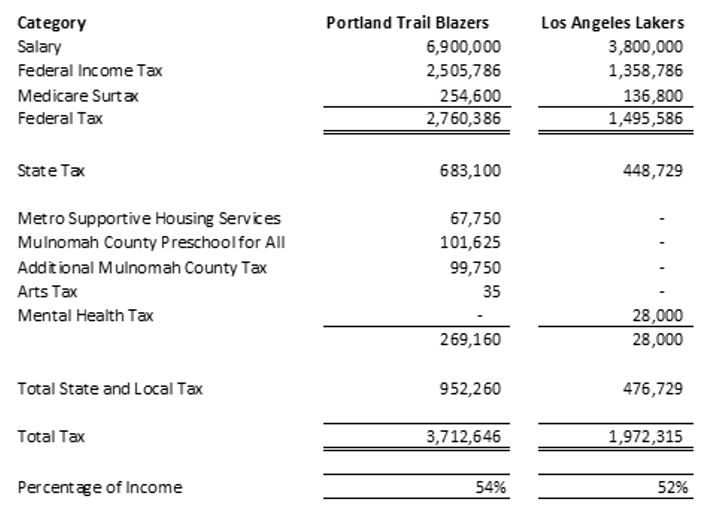
Dalton Knecht’s slide to the 17th overall pick in this year’s draft not only reduced his salary but also significantly lowered his tax liability compared to his initial projection with Portland. Both the Trail Blazers and the Lakers rank among the NBA’s most tax-heavy teams. However, based on redrafts for the 2024 NBA Draft, Knecht’s impressive NBA performance would place him back in the Top 10, matching his original draft projections. In these redrafts, he is projected to land with Memphis, returning the college star to Tennessee—a state that not only played a key role in his collegiate success but also offers the financial advantage of no state income tax.
Dalton Knecht’s situation underscores the critical importance of professional financial planning for athletes navigating the complexities of tax obligations and contract negotiations. The varying tax implications across teams and states make it essential for athletes like Dalton Knecht to work with a knowledgeable accountant who can help maximize earnings and minimize liabilities. At Withum, we specialize in providing the expertise and guidance needed to support professional athletes, ensuring they make informed financial decisions and build a secure future.
Author: Evan Graulau | [email protected]